

Change
one interval
Change
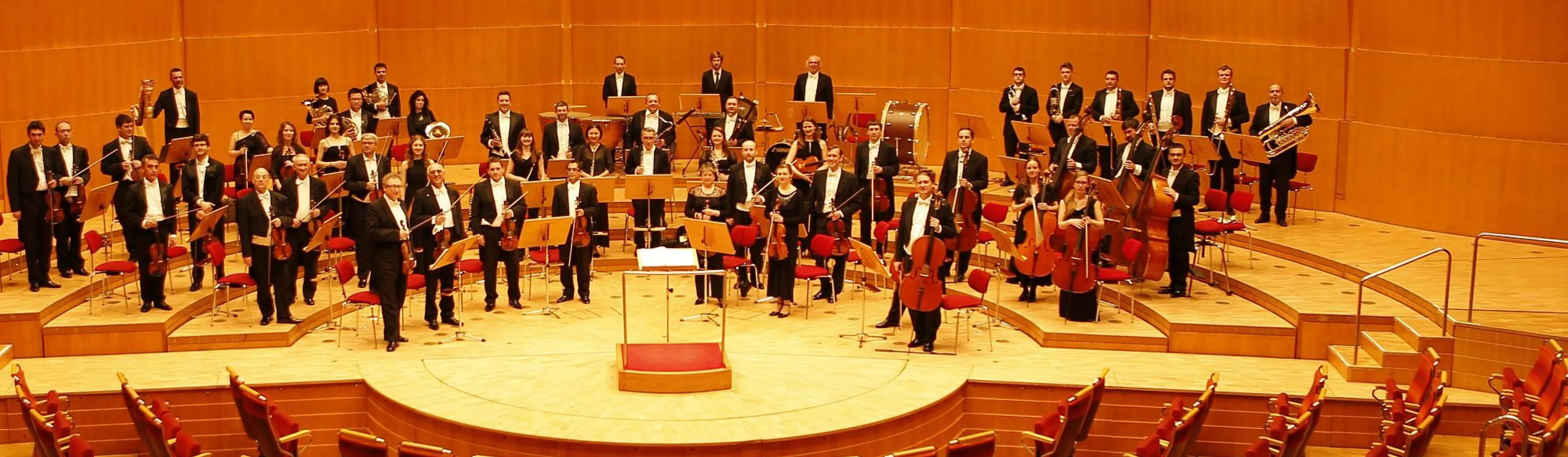
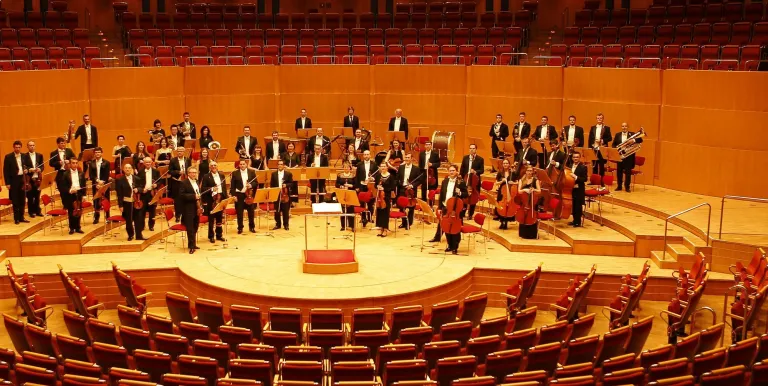
The programme and performers of the concert have changed. Instead of Muhai Tang and the Shanghai Philharmonic Orchestra, Juri Gilbo and the Russian Chamber Philharmonic St. Petersburg will perform.
Featuring:
Shostakovich
Symphony in E flat major op. 70, No. 9
Grieg
Piano Concerto in A minor, op. 16
Tchaikovsky
Polonaise from Eugen Onegin
Beethoven
Symphony No. 5 in C minor ("Fate”), op. 67
The Russian Chamber Philharmonic St. Petersburg, now headed by the world famous conductor Juri Gilbo, was formed in 1990 in the bastion of the legendary Russian music school, the Saint Petersburg Conservatory. This colourful show features two compositions from the orchestra's home country. The soloist, Lilya Zilberstein, following her studies at Gnessin Russian Academy of Music and being inhabitant in Germany from 1990, she made there her debut with the Berlin Philharmonic, conducted by Claudio Abbado. Since then, she has regularly performed with a range of well-known conductors and musicians.
Shostakovich's Symphony No. 9 was first performed in Leningrad (formerly and currently known as Saint Petersburg) just after the end of World War Two, yet it is one of the Russian composer's most upbeat symphonies, featuring Haydn-like humour and a neoclassical lightness of tone. Edvard Grieg's Piano Concerto in A minor is a superb example of the blending of national traditions, European musical heritage and original thought. The final movement features a symphonic interpretation of the halling, a Norwegian folk dance, and sounds in certain sections which imitate a Norwegian folk fiddle.
Polanaise is the prelude to the third act from Tchaikovsky's opera Eugene Onegin, which premiered in 1879. The Polonaise, which sets the mood for a ball organised by a rich Saint Petersburg aristocrat, has become a popular orchestral piece in its own right.
The concert concludes with Beethoven's Symphony No. 5. This revolutionary, innovative masterpiece is perhaps the most played piece in the history of symphonic music. The four main themes of the composition, represented by four different sounds, feature in each of the four movements. The leading emotional arc of the piece, which ranges from tragedy to victorious splendour, can be interpreted as a musical expression of the composer's deafness and the superhuman will to overcome.
Presented by: Müpa Budapest






-
We wish to inform you that in the event that Müpa Budapest's underground garage and outdoor car park are operating at full capacity, it is advisable to plan for increased waiting times when you arrive. In order to avoid this, we recommend that you depart for our events in time, so that you you can find the ideal parking spot quickly and smoothly and arrive for our performance in comfort. The Müpa Budapest underground garage gates will be operated by an automatic number plate recognition system. Parking is free of charge for visitors with tickets to any of our paid performances on that given day. The detailed parking policy of Müpa Budapest is available here.